Why Can’t I Fall Asleep Even When I’m Exhausted?
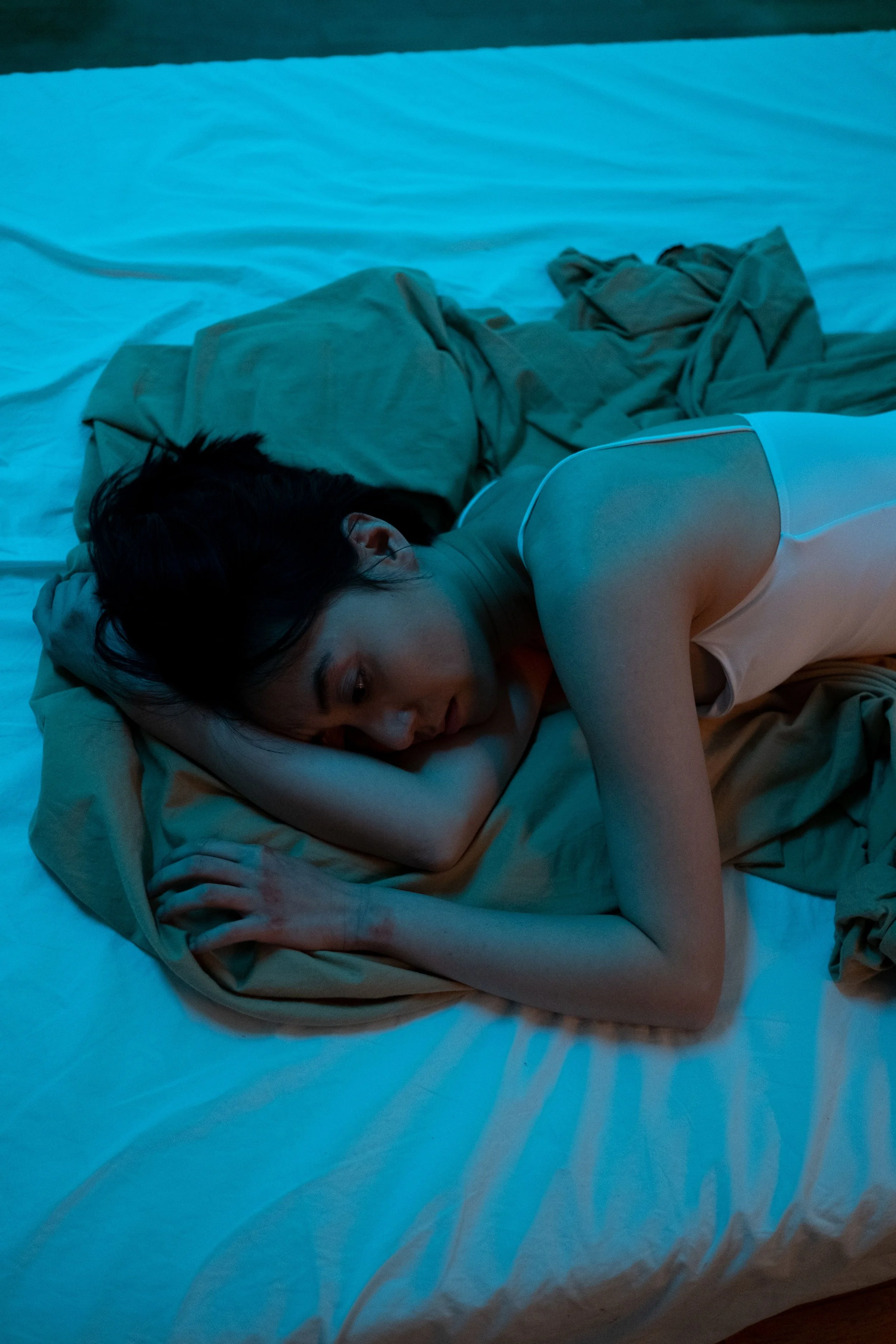
You've been running all day. Busy day at work. Errands on the way home. Soccer carpool. Virtual PTA meeting. Dinner. You're bone tired, exhausted. You collapse into bed, close your eyes—and lie awake until 1 a.m.
The to-do list starts. You replay that conversation from this morning. You start calculating how many hours of sleep you'll get if you fall asleep right now. And with every passing minute, a new worry joins the pile: I'm going to be exhausted tomorrow. I won’t be able to function. Why can't I just turn my brain off? I need to get to sleep right now.
If this is a regular experience for you, you're not alone, and you're not broken. But what's happening in your nervous system is more specific than "stress," and it deserves a more specific answer.
The Real Reason You Can't Fall Asleep, Even When You're Tired
Being physically exhausted and being able to fall asleep are connected to two different systems in your body, and anxiety can disrupt one while leaving the other fully activated.
Here's what's happening: when your brain perceives a threat, it triggers your sympathetic nervous system. Your body releases cortisol and adrenaline. Your heart rate increases slightly. Your mind sharpens and scans for danger. This is your threat response doing exactly what it's designed to do. It doesn’t matter if this threat is real or imagined. Physical or social. Whether it’s the imminent danger your ancestors faced when being chased by a tiger in the wild, or the threat of missing the 7 a.m. train tomorrow morning, your brain doesn’t know the difference. It reacts just the same.
The problem for high-achieving women with anxiety is that this threat response doesn't reliably switch off at bedtime. Your body is exhausted. Your brain is still running threat detection. And falling asleep requires something your nervous system won't allow: a genuine sense of safety.
Research confirms this loop: anxiety prevents sleep, and sleep deprivation fuels anxiety. The Sleep Foundation describes this as a self-reinforcing cycle: worry makes it harder to fall asleep and stay asleep, and lost sleep makes anxiety worse. (Anxiety and Sleep, Sleep Foundation, October 2025.) This well-documented physiological and psychological cycle can be difficult to break on your own.
What makes it even worse is that over time, the bed itself becomes associated with wakefulness and worry. Your nervous system learns that lying down means this is when we think about all the things, and starts doing it automatically.
This is no longer just anxiety. At this point, it's insomnia. And it needs its own targeted treatment.
Why "Good Sleep Hygiene" Isn't Fixing It
If you've googled this before, you've seen the advice: no screens before bedtime, keep a consistent sleep-wake schedule, avoid caffeine after noon, maybe try magnesium before bed. These things aren't wrong, and they’ve probably helped a little. But if you've tried them and you're still lying awake in the middle of the night, there's a reason.
Sleep hygiene addresses habits. It doesn't address the underlying hyperarousal that's keeping your nervous system activated. It doesn't touch the anxiety-insomnia cycle that's been running for months or maybe even years. And it doesn't address what's often driving chronic insomnia in high-achieving women: a nervous system that has learned, through repetition, that there’s no time to rest and be still.
The Anxiety-Insomnia Cycle
When insomnia develops alongside anxiety, your worries are often intensified. More time awake in bed means more time to focus on anxious thoughts. And even if your anxiety gets better, you might still have trouble sleeping. This is because you've developed unhelpful ways of thinking or acting about sleep that take on a life of their own.
This is the part most people don't realize: insomnia often outlives the original trigger. You may have started having trouble sleeping during a stressful period at work, after the birth of a child, following a loss, or during the onset of perimenopause. The original stressor may be gone, but the pattern often remains. Your brain holds onto the message that sleep itself is a source of stress, and this belief perpetuates the cycle.
One study found that anxiety sensitivity was actually a more significant predictor of sleep problems than the specific anxiety diagnosis itself. (Baker et al., 2017.) What is anxiety sensitivity? Anxiety sensitivity is the fear of the anxiety symptoms themselves, and your perceived consequences of these symptoms.
This matters because it shifts the focus from what you were originally anxious about to how you relate to the anxiety itself. You’re no longer worried about being prepared for that meeting tomorrow, or how you’ll manage to be in 3 places at once during the after-school rush. Now you’re stressing about how bad you’re going to feel tomorrow because it’s 2 a.m. and you’re lying awake instead of getting a good night’s sleep. That fear of the consequences of not sleeping becomes its own source of arousal, making sleep even less likely. In other words, the worry about not sleeping becomes its own driver of insomnia.
Why Women Are Disproportionately Affected
One in four women experiences insomnia symptoms (Office on Women’s Health, U.S. Department of Health & Human Services). This may include trouble falling asleep, staying asleep, or both. Insomnia is more common in women, especially older women, than in men.
This isn't a coincidence. Women are more likely to internalize stress, to carry the invisible mental load of managing households and relationships alongside demanding careers. Women also experience hormonal shifts that can disrupt sleep at any life stage, from the luteal phase of the menstrual cycle, to postpartum, to perimenopause and menopause. Many women who never struggled with sleep before find themselves suddenly wakeful, wired, or exhausted but unable to rest during these transitions.
And for women with anxiety, perfectionism, or a chronically activated nervous system, the combination is particularly difficult. Your brain is wired to anticipate, plan, and solve. That's exactly what it keeps doing at 3 a.m.
For Many, the Most Effective Starting Point is CBT-i
Cognitive Behavioral Therapy for Insomnia (CBT-i) is the gold-standard treatment for chronic insomnia. The American Academy of Sleep Medicine recommends CBT-i as the first-line approach for treating insomnia, above medication. And unlike medication, because CBT-i treats the root causes of insomnia rather than just masking symptoms, CBT-i offers lasting results.
How Does CBT-i Work?
CBT-i works by directly targeting the perpetuating cycle itself: the behaviors that have accidentally trained your brain to associate your bed with wakefulness, and the thoughts that are keeping your nervous system activated when it should be winding down.
CBT-i is a structured, short-term program, with the majority of clients seeing significant improvement in just 6–8 sessions. CBT-i is built around 5 core components:
Stimulus Control
Sleep Restriction
Cognitive Restructuring
Sleep Hygiene
Relaxation Training
When combined, these techniques target both the behaviors and the thought patterns that are keeping your nervous system activated when it should be winding down.
How is CBT-i Different from Talk Therapy?
What makes CBT-i different from general anxiety therapy is its specificity. CBT-i isn't open-ended talk therapy, and doesn’t require the time commitment characteristic of many traditional talk therapies. With CBT-i, you’ll attend 6-8 clearly structured treatment sessions with defined techniques and a measurable endpoint: you getting a good night’s sleep.
When the Root Is Trauma, Not Just “Stress”
CBT-i is highly effective for insomnia that developed around a specific stressor or life transition. But for some women, the chronic hyperarousal goes deeper than a learned sleep pattern. If you grew up in an environment where it wasn't safe to relax, where you were always scanning for what came next, managing other people's emotions, or simply never allowed to just be, your nervous system may have been running in threat-detection mode long before your sleep problems started.
While CBT-i techniques can meaningfully help, for women carrying relational or developmental trauma, sleep difficulties are often one symptom of a nervous system that never fully learned what safety feels like. If this sounds like you, and you find that even CBT-i isn’t getting you to a place where you want to be in terms of your sleep, it may be time to consider trauma-focused therapy that addresses the underlying dysregulation directly.
EMDR (Eye Movement Desensitization and Reprocessing) is particularly well-suited for this. Rather than teaching your brain new behaviors around sleep, EMDR works to process the experiences that taught your nervous system it wasn't safe to rest in the first place. Many clients find that as trauma processing progresses, sleep naturally improves.
When It's Time to Get Help
Consider reaching out if:
You've had trouble falling or staying asleep at least three nights a week for three months or more
You've tried sleep hygiene recommendations and are still having a hard time falling asleep, staying asleep, waking up too early in the morning
Your exhaustion is affecting your work, your relationships, or your energy levels, or your personality
You're increasingly anxious about sleep itself or find yourself dreading bedtime
You're considering or already relying on sleep medication and want to explore other options
There’s a reason you haven’t been able to resolve this on your own. Whether the answer is CBT-i, trauma-focused EMDR, or a combination of both, effective treatment exists. And it’s closer than you think.
Susan Candiloro, LCSW-R, is an EMDRIA Certified Therapist and EMDRIA Approved Consultant offering virtual therapy in New York and Florida. With over 25 years of experience in the mental health field, Susan specializes in working with women navigating the lasting effects of relational and developmental trauma, including anxiety, perfectionism, and the chronic hyperarousal that makes rest feel impossible. Interested in working with Susan? Reach out here.